

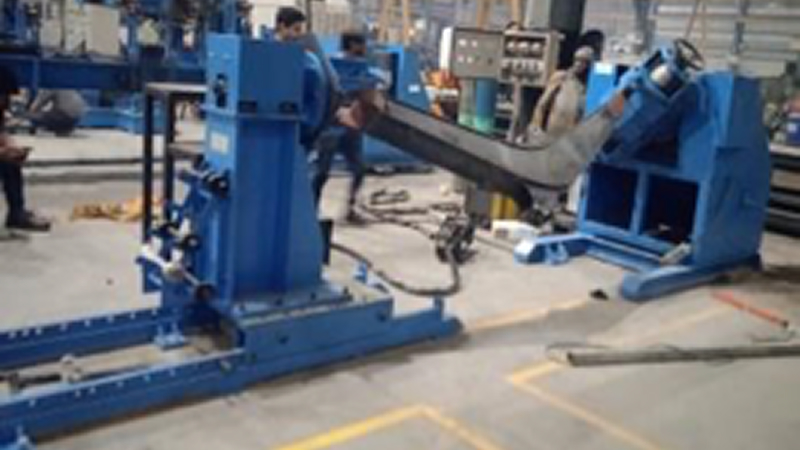
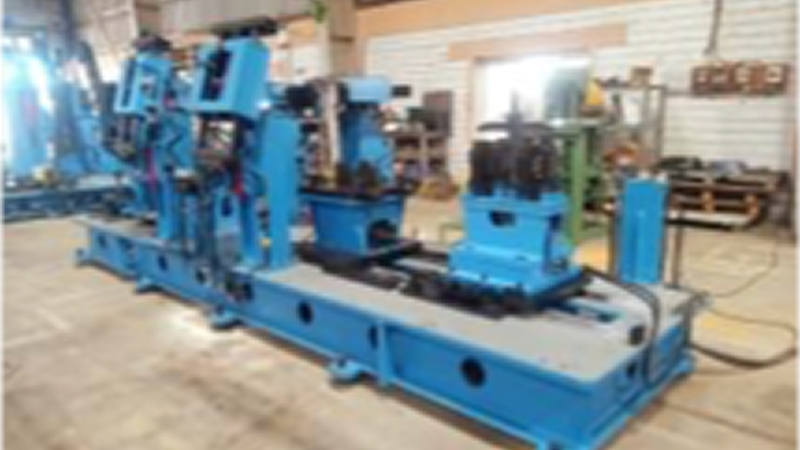
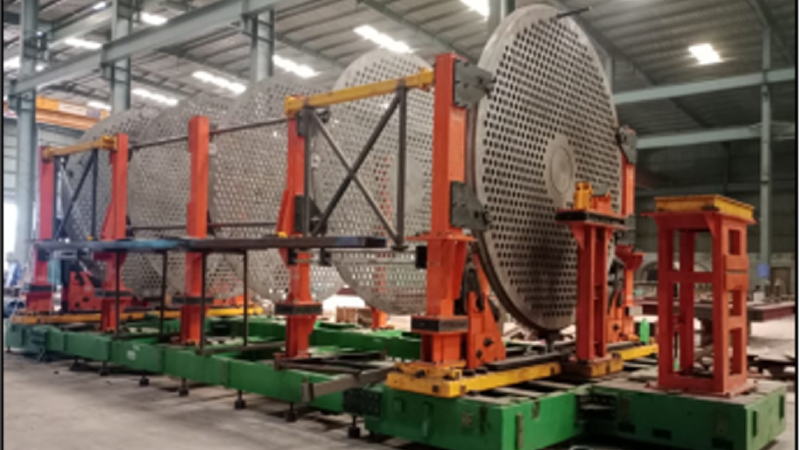
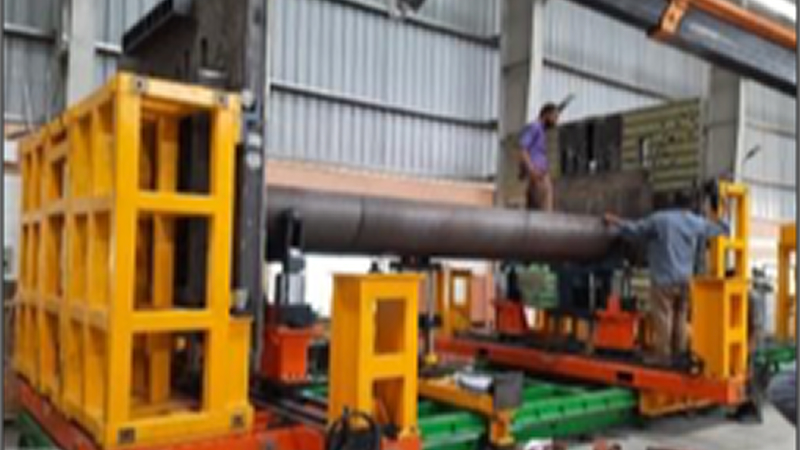
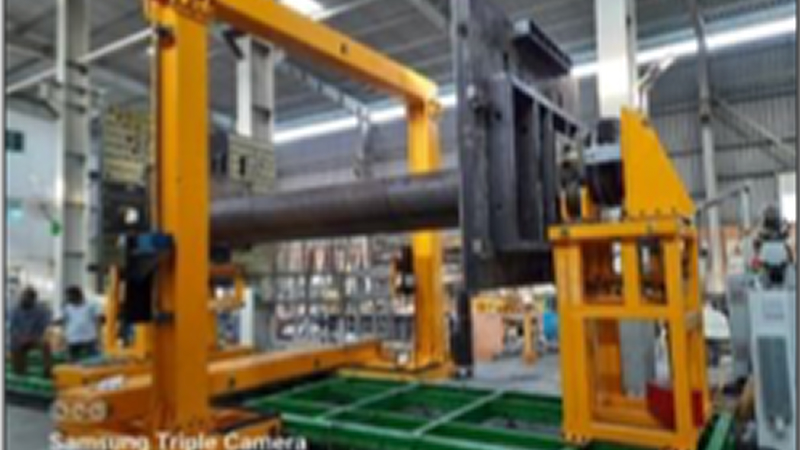
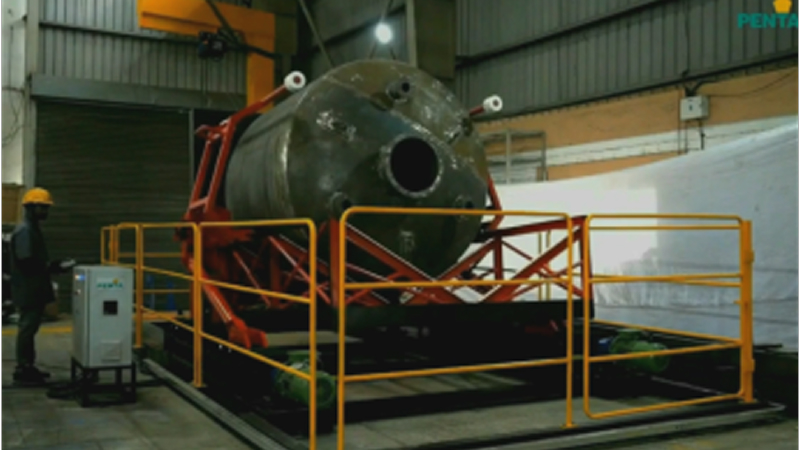
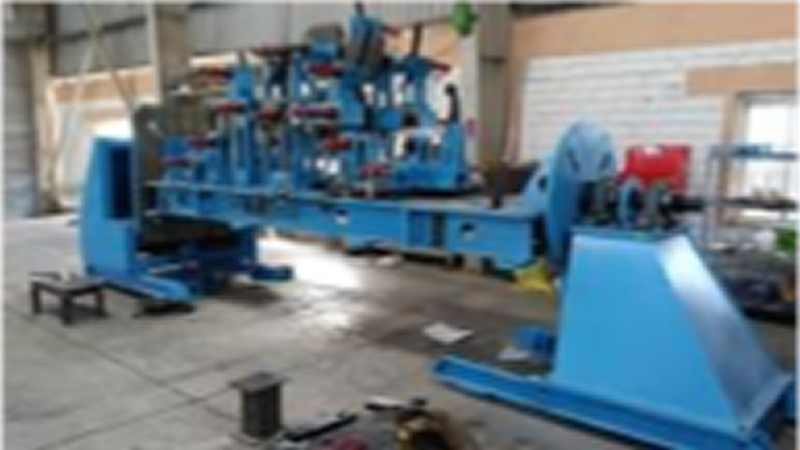
A Welding Fixture is a specially designed tool used to hold, position, and support components securely during welding operations. The main purpose of a welding fixture is to ensure that the welded parts maintain correct alignment and dimensional accuracy throughout the process, compensating for heat distortion and minimizing human error. These fixtures are essential for mass production, automated welding, and precision welding tasks.
Features of Welding Fixtures
Rigid and Heat-Resistant Construction
• Made from materials like cast iron or alloy steel that can withstand high
temperatures and welding stresses.
Precise Locating and Clamping
• Includes locating pins, clamps, and supports to accurately position parts.
Quick Clamping and Release
• Pneumatic, hydraulic, or manual clamps for fast operation.
Modular or Adjustable Design (optional)
• Some fixtures allow for flexibility to accommodate different product variants
Weld Access Clearance
• Designed to provide access for welding torches or robotic arms to reach joints
without obstruction.
Anti-Spatter Protection
• Often includes coatings or features to resist weld spatter buildup.
Cooling Provisions (in advanced systems)
• Some high-performance fixtures have cooling channels or materials to reduce
thermal deformation.
Thermal Stability (Welding Fixtures)
• Designed to withstand heat and thermal expansion during welding.
Integration with Robots or Automation
• Compatible with automated lines for seamless operation.
Applications of Welding Fixtures
Automotive Industry – Used for welding chassis frames, suspension systems, and exhaust components.
Shipbuilding and Heavy Equipment – For welding large assemblies like hull sections, frames, or supports.
Aerospace Industry – Ensures high precision in welding airframe components and fuel systems.
Structural Steel Fabrication – Used in the assembly of beams, trusses, and other structural components.
Pipeline and Tank Welding – Holds pipes, flanges, and cylindrical components in proper alignment.
Robotic Welding Systems – Integrated with robots for repetitive, automated welds in high-volume production.
Advantages of Welding Fixtures
Improved Weld Accuracy and Quality
• Maintains alignment and prevents distortion, ensuring strong, reliable welds.
Enhanced Productivity
• Speeds up the welding process, especially in mass production environments.
Reduces Operator Dependency
• Simplifies the welding task, enabling less experienced workers to perform
precision welding.
Increased Repeatability and Consistency
• Produces identical welds across multiple units with minimal variation.
Lower Rework and Scrap Rates
• Minimizes errors and material waste due to misalignment or improper welds.
Supports Automation and Robotics
• Enables seamless integration into robotic welding cells for consistent, high-speed
operations.
Safety Enhancement
• Holds components firmly, reducing the risk of movement, injury, or weld defects
during operation.