

bannerimg

Logistics Design

Introduction to Logistics Design

Logistics Design refers to the strategic planning and structuring of logistics systems, including transportation, warehousing, distribution, inventory, and information flow. The objective is to optimize the movement and storage of goods from the point of origin to the point of consumption while minimizing costs, ensuring timely delivery, and maintaining quality and service levels.


An effective logistics design supports supply chain agility, operational efficiency, and customer satisfaction, making it a critical function for any organization involved in physical goods movement.

Key Features of Logistics Design

Network Design

• Selection of distribution centers (DCs), cross-docks, warehouses, and transportation hubs to create an optimal supply chain network.

Transportation Planning

• Determines the best modes (road, rail, air, sea), routes, and carriers for costefficient and timely delivery.

Warehouse and Storage Design

• Layouts, racking systems, and zoning optimized for fast picking, storage density, and minimal handling.

Inventory Strategy

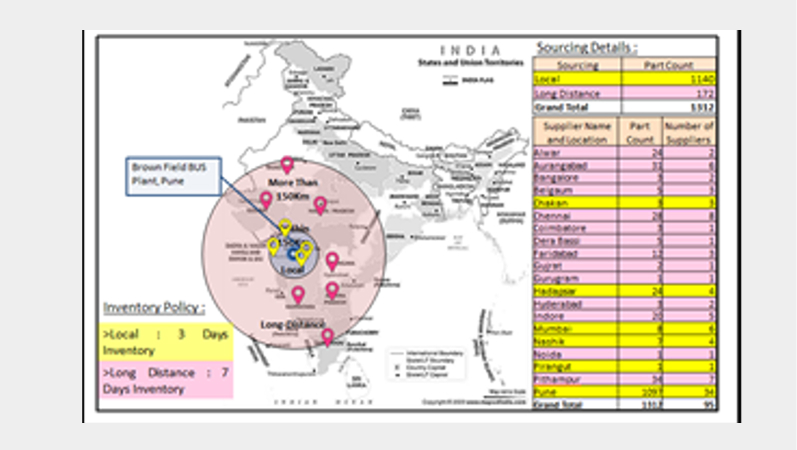
• Decisions on stock levels reorder points, and placement to balance availability and cost.

Demand Forecasting and Planning

• Aligns logistics operations with projected demand using data and predictive models.

IT and Automation Integration

• Includes use of WMS (Warehouse Management Systems), TMS (Transportation Management Systems), RFID, and IoT.

Reverse Logistics Planning

• Structure for handling returns, recycling, and product recalls.

Sustainability and Compliance

• Considers fuel efficiency, carbon footprint, and regulatory compliance in the design.

Applications of Logistics Design

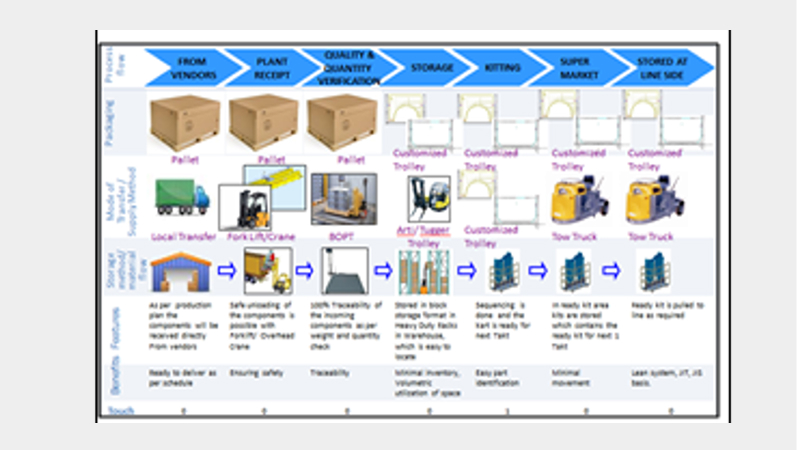
  • Manufacturing Supply Chains – Movement of raw materials to plants and finished goods to customers using lean logistics networks.
  • Agricultural and Perishable Goods – Time-sensitive and temperature-controlled logistics system design.
  • Automotive and Industrial Goods – Inbound and outbound logistics for heavy, large, or modular components.
  • 3PL and Logistics Service Providers – Designing flexible, scalable systems for multiple clients and industries.
  • Humanitarian and Disaster Relief Logistics – Rapid deployment of resources and materials in unpredictable and urgent

Advantages of Effective Logistics Design

Cost Efficiency

• Reduces transportation, storage, and handling costs through optimized routing and network planning.

Improved Delivery Performance

• Enhances on-time delivery rates and reduces lead times.

Enhanced Inventory Management

• Balances stock levels and reduces carrying and obsolescence costs.

Greater Flexibility and Scalability

• Easily adapts to changes in volume, product mix, or market demand.

Improved Customer Satisfaction

• Faster, more reliable deliveries with better order accuracy.

Risk Reduction

• Minimizes disruptions through contingency planning and network redundancy.

Better Use of Technology

• Real-time tracking, predictive analytics, and automation streamline operations.

Supports Sustainable Practices

• Optimizes resource usage and reduces environmental impact through efficient planning.